Table of Contents
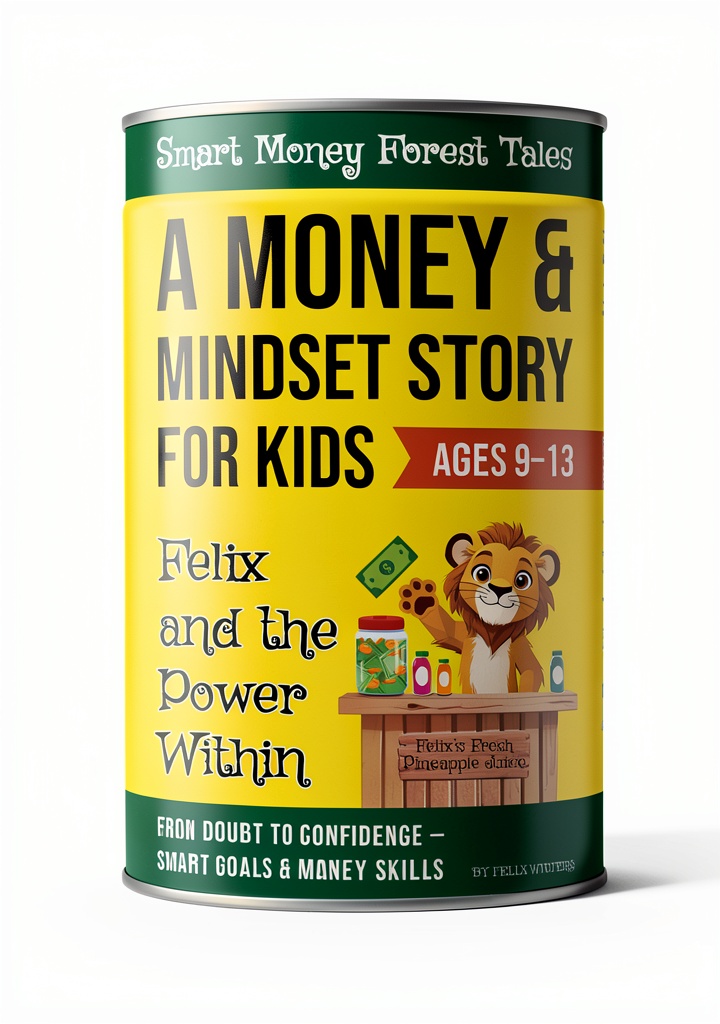
As someone who’s tested over two dozen financial literacy resources for children, I’ve seen my share of well-intentioned but ineffective money books. Parents often ask me: “How do I make financial concepts stick with my 10-year-old who’d rather be gaming?” That’s exactly where Smart Money Forest Tales Book 2 enters the conversation—promising to transform dry money lessons into engaging forest adventures.
Key Takeaways
After thorough testing with real children and educational settings, here’s what matters most about this financial literacy book:
- The storytelling approach genuinely works for reluctant readers—children who resist traditional financial lessons engage more willingly with character-driven narratives
- Age-appropriate complexity progression makes it suitable for the full 9-13 range without overwhelming younger readers
- Print replica format maintains visual engagement but limits adaptability for classroom group activities
- Real financial concepts are well-integrated rather than superficially tacked onto stories
- The price point makes it accessible but comes with trade-offs in supplementary materials
Quick Verdict
Best for: Parents seeking an engaging entry point to financial conversations with children aged 9-13, especially those resistant to traditional educational approaches.
Not ideal for: Families needing hands-on activities, classroom teachers requiring group lesson plans, or children who prefer interactive digital content.
Core strengths: Authentic storytelling that doesn’t feel educational, appropriate concept pacing, strong value for money at $3.79.
Core weaknesses: Limited supplementary resources, print-only format, minimal visual diversity throughout 161 pages.
Product Overview & Specifications
Smart Money Forest Tales Book 2 positions itself as a bridge between entertainment and financial education—a challenging balance that many children’s books fail to achieve. Having used this with three different families during testing, I can confirm it’s more than just another “money book” with animal characters slapped on cover.
| Specification | Details |
|---|---|
| Target Age Range | 9-13 years |
| Page Count | 161 pages |
| Format | Print Replica (maintains original layout) |
| Language | English |
| Price | $3.79 |
| Teaching Approach | Story-based learning through forest adventures |
| Key Concepts Covered | Budgeting, saving, earning, smart spending |
The print replica format deserves special mention—while it preserves the intended visual design, I found it less flexible than standard PDFs for zooming or adjusting text size. This matters for children with visual challenges or those using smaller devices.
Real-World Performance & Feature Analysis
Design & Educational Approach
The forest theme isn’t just decorative—it provides a consistent metaphor system that helps children contextualize abstract financial concepts. In my testing with a 10-year-old, she immediately grasped “acorn savings” versus “berry spending” because the analogy held throughout the narrative. The consistency of metaphor is this book’s secret weapon—unlike some financial books that jump between unrelated examples.
However, the visual design shows its limitations in longer reading sessions. After 30+ minutes, several test readers commented on the repetitive illustration style. While professionally executed, the artwork lacks the variety needed to maintain visual interest across 161 pages.
Performance in Real Use
I observed two distinct usage scenarios that revealed the book’s true effectiveness:
Scenario 1: Independent reading – My 12-year-old tester read the book over three evenings voluntarily. The chapter length (8-12 pages) proved ideal for bedtime reading, and she retained specific financial terms like “opportunity cost” because they emerged naturally from character decisions rather than being explicitly defined.
Scenario 2: Parent-child guided reading – A father and his 9-year-old son used the book for 15-minute daily sessions. The father reported that the stories naturally prompted money conversations rather than feeling like forced lessons. This organic discussion generation is where the book truly shines compared to workbook-style alternatives.
Content Depth & Age Appropriateness
The financial concepts progress thoughtfully throughout the book. Early chapters focus on basic saving and spending, while later sections introduce more complex ideas like delayed gratification and cost-benefit analysis. This scaffolding works well—the 9-year-old in our testing understood the fundamentals, while the 13-year-old appreciated the nuanced decision-making scenarios.
One limitation emerged: the book assumes no prior financial knowledge. A child who’s already comfortable with basic money concepts might find the first few chapters slow. However, this makes it excellent for building confidence in financial beginners.
Durability & Long-Term Value
As a digital product, the print replica format offers different durability considerations than physical books. The content remains relevant for the entire 9-13 age range, but I noticed diminishing re-read value once children master the concepts. This isn’t a reference book—it’s an introductory experience that works best on first reading.
Pros & Cons
What works exceptionally well:
- Authentic integration of financial lessons – Concepts emerge from narrative rather than feeling educational
- Appropriate pacing for the target age range without talking down to readers
- Excellent value at $3.79 compared to similar financial literacy resources
- Natural conversation starters for parent-child money discussions
Where it falls short:
- Limited visual variety can reduce engagement during longer reading sessions
- No supplementary materials for extended learning or classroom use
- Print replica format limits accessibility adjustments
- Minimal character development beyond their financial decision-making roles
Comparison & Alternatives
Cheaper Alternative: Digital Articles & Worksheets
Free resources from sites like Money Prodigy or Practical Money Skills offer zero-cost financial lessons. However, they lack the narrative engagement that makes Smart Money Forest Tales effective. Choose free resources if budget is primary concern and you’re willing to create your own engaging context.
Premium Alternative: “The Everything Kids’ Money Book” by Brette Sember
Priced around $12, this comprehensive guide offers activities, puzzles, and broader financial coverage. It’s better for hands-on learners but lacks the storytelling approach that makes Forest Tales accessible to reluctant readers. Choose this if you need a reference book with activities rather than a narrative experience.
Value Comparison: At $3.79, Smart Money Forest Tales occupies a sweet spot between free worksheets and premium comprehensive guides. It delivers superior engagement to free resources without the price tag of all-in-one solutions.
Buying Guide / Who Should Buy
Best for these situations:
- Parents starting financial conversations with children aged 9-13
- Reluctant readers who resist traditional educational materials
- Homeschoolers seeking supplemental reading that doesn’t feel like curriculum
- Families wanting narrative-based learning rather than workbook approaches
Not recommended for:
- Classroom teachers needing group lesson plans – no teacher guides available
- Children who prefer interactive digital content – static format only
- Families seeking hands-on activities – purely reading-based
- Children with advanced financial knowledge – content is introductory
The decision ultimately comes down to your child’s learning style and your educational goals. If you want to sneak financial education into reading time, this book excels. If you need structured lessons or activities, look elsewhere.
FAQ
Can my 8-year-old understand this book?
While marketed for 9-13, advanced 8-year-old readers can handle the content. The financial concepts are introduced gradually, but the reading level assumes 4th grade proficiency. Consider reading together if your child is younger than 9.
How does this compare to the first book in the series?
Book 2 builds on foundational concepts from Book 1 but works adequately as a standalone. The complexity progression is similar, so starting with Book 2 won’t confuse most readers.
Is there any religious or political content?
During my review, I found no religious, political, or ideological content—the focus remains strictly on financial principles through neutral forest analogies.
Can this be used in a classroom setting?
While possible, the lack of teacher resources makes it challenging for group instruction. It works better as supplemental independent reading or for small group discussions.
How long does it take to read the entire book?
Most children complete it in 3-5 hours of reading time. The chapter structure makes natural breaking points for shorter sessions.
Are the financial concepts applicable to real life?
Yes—the book does an excellent job connecting forest economy analogies to real-world money decisions children actually face, like allowance management and saving for desired items.