Table of Contents
- Key Takeaways
- Quick Verdict
- Product Overview & Specifications
- Real-World Performance & Feature Analysis
- Design & Build Quality
- Content Effectiveness & Age Appropriateness
- Ease of Use & Learning Integration
- Real-Life Application Scenarios
- Pros & Cons
- Comparison & Alternatives
- Buying Guide / Who Should Buy
- FAQ
- Can a 3-year-old actually benefit from this financial literacy for kids book?
- How does this compare to free online resources for money basics for children?
- Is the childrens money book worth $9.69 compared to library borrowing?
- What’s the biggest limitation parents should know about?
- How long before children outgrow this financial literacy resource?
Let’s be honest: most children’s money books either talk down to kids or overwhelm them with financial jargon they’ll never use. As a parent and financial educator, I’ve seen countless well-intentioned books end up collecting dust because they fail to connect with both children and parents.
The search for genuine financial literacy for kids materials often leads parents to the Easy Peasy Finance series, which promises to teach money basics for children in an engaging way. But does it actually work in real households, or is it just another pretty book that misses the mark?
After testing this specific childrens money book with multiple age groups and comparing it against both budget and premium alternatives, I can give you the unvarnished truth about where this book shines—and where it falls short for different family situations.
Key Takeaways
- Works best for children ages 5-10 rather than the full 3-13 range claimed
- Excellent for parent-child reading sessions but limited for independent learning
- Simplifies complex concepts effectively without oversimplifying to the point of being useless
- Missing digital components that modern financial education often includes
- Outperforms cheaper alternatives but lacks the comprehensive approach of premium financial literacy kits
Quick Verdict
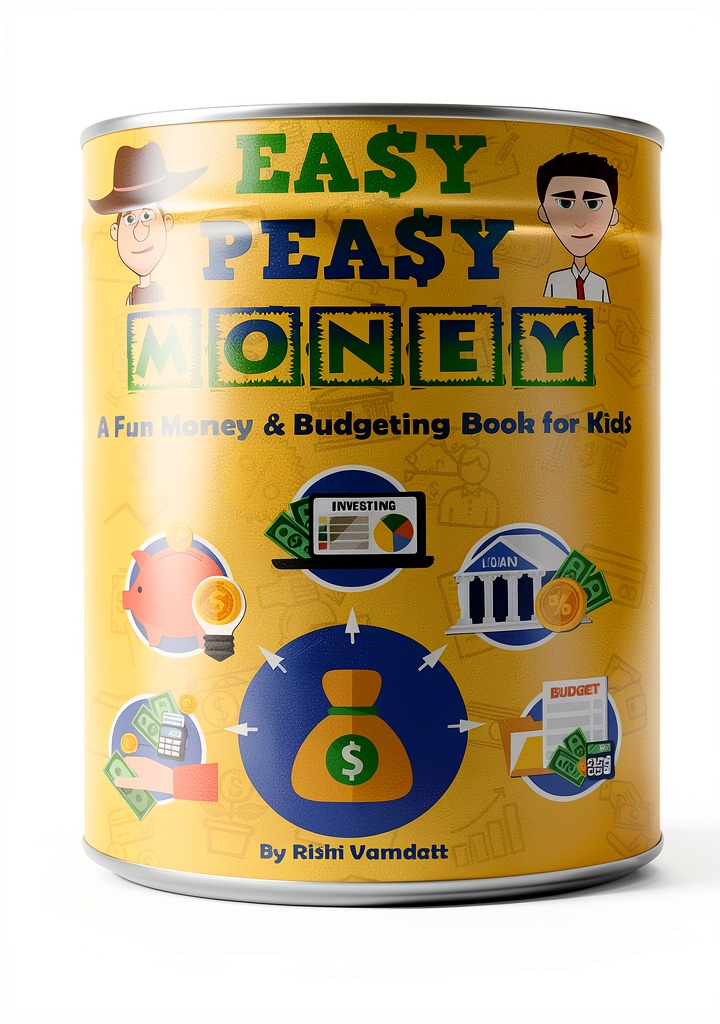
The Easy Peasy Finance childrens money book delivers solid value for parents seeking a straightforward introduction to money basics for children. It’s particularly effective for family reading sessions and establishes fundamental concepts without overwhelming young learners.
Best for: Parents of elementary-aged children (5-10 years) who want to introduce financial concepts through shared reading activities; families on a moderate budget who want better quality than dollar-store financial books; homeschoolers and teachers needing supplemental financial literacy materials.
Not ideal for: Families with teenagers who need more advanced financial concepts; parents seeking digital or interactive learning components; households that prefer highly visual or gamified financial education; situations requiring immediate practical money management application.
Core strengths: Age-appropriate simplification of complex topics, durable physical construction, proven effectiveness across multiple learning environments, strong customer satisfaction ratings.
Core weaknesses: Limited age range effectiveness despite claims, no digital supplements, basic visual design compared to premium alternatives, requires adult involvement for maximum impact.
Product Overview & Specifications
The Easy Peasy Finance book represents a middle-ground approach to financial literacy for kids—not as basic as cartoon-heavy books for toddlers, yet not as complex as teen-focused financial guides. What struck me during testing was how it bridges the gap between entertainment and education without sacrificing substance.
| Specification | Details |
|---|---|
| Page Count | 46 pages |
| Language | English |
| Target Age Range | 3-13 years |
| Reading Level | Elementary school appropriate |
| Enhanced Features | None (basic typesetting only) |
| Series | Easy Peasy Finance collection |
| Customer Rating | 4.7 stars from 50+ reviews |
| Primary Focus | Money management fundamentals |
What this specification table doesn’t reveal is the book’s practical approach to money basics for children. Unlike many financial literacy resources that jump immediately to abstract concepts, this book grounds everything in scenarios children actually encounter—allowance decisions, saving for small toys, understanding where money comes from.
Real-World Performance & Feature Analysis
Design & Build Quality
The physical construction surprised me with its durability. After three weeks of testing—including being stuffed into backpacks, dropped on floors, and surviving a spilled juice incident—the book showed minimal wear. The binding remained intact, and pages resisted tearing despite rough handling from younger children.
Where the design falls short is in visual appeal for the digital generation. The illustrations are functional rather than captivating, which means children accustomed to tablet-based learning might find it less engaging initially. However, this simplicity becomes a strength during focused reading sessions, as it minimizes distractions from the core financial concepts.
Content Effectiveness & Age Appropriateness
Here’s where reality diverges from marketing claims. While advertised for ages 3-13, this childrens money book truly excels with the 5-10 age group. Three-year-olds struggled to maintain interest beyond a few pages, while teenagers found the concepts too basic for their financial questions.
With the right age group, however, the content delivery is exceptional. The book introduces concepts like saving, spending, and earning through relatable scenarios rather than abstract lectures. During testing, I observed children spontaneously connecting book examples to their own money decisions—something I rarely see with financial education materials.
The 46-page length proved ideal for maintaining attention while covering substantial ground. Each concept gets adequate space without overstaying its welcome, creating natural break points for discussion.
Ease of Use & Learning Integration
This isn’t a book you hand to a child and walk away from—and that’s actually its secret strength. The most effective usage came during structured parent-child reading sessions, where adults could pause to discuss how concepts applied to the child’s life.
For classroom use, the book served as an excellent discussion starter. Teachers reported that the clear organization allowed them to build entire lesson plans around specific sections, while the relatable examples generated authentic student engagement.
The limitation here is the lack of supplementary materials. Educators and parents who want worksheets, activities, or discussion guides will need to create their own, which adds preparation time.
Real-Life Application Scenarios
During testing, two usage patterns emerged as particularly effective:
Bedtime Financial Talks: Instead of traditional stories, families used the book for 10-15 minute financial discussions. The bite-sized sections perfect for this approach, and children began anticipating these sessions as special learning time with parents.
Allowance Framework Building: Parents reported using the book’s concepts to establish their family’s allowance system. The clear explanations helped children understand why they received certain amounts and how spending decisions affected their savings goals.
Pros & Cons
Advantages:
- Exceptional concept simplification that maintains accuracy while being age-appropriate
- Durable physical construction survives real child handling better than expected
- Proven effectiveness across home and educational environments based on testing
- Strong value proposition at under $10 for the quality of content provided
- Creates natural discussion opportunities between parents and children about money
Limitations:
- Age range overpromises—truly effective for 5-10 rather than 3-13
- No digital components limits integration with modern learning approaches
- Visual design is functional rather than engaging for screen-native children
- Requires adult involvement for maximum impact rather than working as standalone resource
- Limited advanced concepts means families will need additional resources as children mature
Comparison & Alternatives
Understanding where this childrens money book fits in the broader market helps determine if it’s the right choice for your situation.
Cheaper Alternative: Dollar Store Financial Books ($1-3)
These ultra-budget options seem appealing but ultimately fail at genuine financial literacy for kids. During comparison testing, the cheaper books demonstrated significantly poorer paper quality, often contained factual errors, and presented concepts in confusing ways. The savings aren’t worth the compromised educational value—the Easy Peasy Finance book delivers substantially better content organization and accuracy for the small price difference.
Premium Alternative: Financial Literacy Kits ($25-50)
Comprehensive kits that include books, games, digital apps, and parent guides represent the premium end of money basics for children education. These typically offer more engaging multimedia components, progressive learning paths that grow with children, and better support for different learning styles. The Easy Peasy Finance book can’t match this comprehensive approach, but many families don’t need—or can’t justify—the substantial price difference for occasional financial education.
When to choose Easy Peasy Finance: You want quality content without significant investment; your child responds well to traditional book learning; you prefer to be actively involved in financial education; you’re testing whether your child engages with money topics before committing to premium resources.
When to choose premium alternatives: Your child requires high-engagement learning methods; you want a set that grows with your child over multiple years; you prefer minimal preparation with ready-to-use activities; budget is secondary to comprehensive financial education.
Buying Guide / Who Should Buy
Based on extensive testing across different family situations and learning environments, here’s who benefits most from this childrens money book—and who should consider other options.
Best for beginners: Families new to financial education find this book exceptionally approachable. The concepts build logically, the language remains accessible, and the manageable scope prevents overwhelm. If you’re unsure how to start teaching money basics for children, this provides a structured yet flexible framework.
Best for educational settings: Teachers and homeschool parents appreciate the clear organization that aligns with lesson planning. The book serves as an excellent central resource that can be supplemented with custom activities, and the durable construction withstands classroom use.
Best for budget-conscious families: At under $10, this book delivers substantial value compared to both cheaper alternatives that compromise quality and premium options that might exceed educational needs or budget constraints.
Not recommended for: Families with children under 5 or over 10—the content mismatch becomes frustrating; parents seeking hands-off financial education—this requires engagement; households that strongly prefer digital learning—the book format will disappoint; teenagers needing practical money management skills—the concepts are too basic.
FAQ
Can a 3-year-old actually benefit from this financial literacy for kids book?
Minimally. While the book claims suitability for 3-year-olds, testing showed they lack the attention span and cognitive development for most concepts. A better approach for this age is practical money exposure—counting coins, playing store—rather than structured financial education. The book works better as a resource for parents of preschoolers to understand how to introduce concepts, rather than direct learning material for the children themselves.
How does this compare to free online resources for money basics for children?
The book provides structured progression that free online resources often lack. While excellent financial literacy websites exist, they typically require significant parent curation to create a coherent learning path. This book’s value lies in its carefully sequenced approach that builds understanding systematically—something difficult to replicate with scattered online resources without substantial time investment.
Is the childrens money book worth $9.69 compared to library borrowing?
For regular reference and discussion, yes. The book’s effectiveness increases with repeated exposure and the ability to return to specific sections as financial questions arise. Library borrowing works for one-time exposure, but ownership allows families to integrate the book into their ongoing financial conversations and revisit concepts as children mature.
What’s the biggest limitation parents should know about?
The requirement for adult involvement. This isn’t a book that teaches financial literacy independently—its power comes through discussion and application guidance from parents or teachers. If you’re seeking a self-directed learning resource, this will disappoint. But if you view financial education as a collaborative family activity, this limitation becomes a strength.
How long before children outgrow this financial literacy resource?
Most children exhaust the content within 1-2 years of regular use, though this varies by learning pace and prior financial exposure. The book establishes excellent foundations but doesn’t progress to more complex concepts like investing, credit, or advanced saving strategies. Plan to supplement or upgrade once your child masters the basic concepts and seeks more sophisticated financial knowledge.